• Skip to primary navigation
  • Skip to main content
  • Skip to primary sidebar
  • Home
  • About Us
  • Privacy Policy
  • Terms of Service
  • Affiliate Disclosure
  • Contact Us

Aquarium Base

Trusted online aquarium guide

  • Freshwater
  • Saltwater
  • Reviews
  • Tips & Guide

Freshwater

How Much CO2 for Planted Aquarium?

By Aquabase | Last Updated Jan 27, 2019

co2 in aquarium

In the previous post, I have review Aquatek Co2 Regulator Mini is great equipment to control flowing CO2 in an aquarium. Now on this page, I will share tips on how much CO2 need for your aquarium plants and how to measure CO2 aquarium. So, please continue to read.

When injecting CO2 into your aquascape aquarium, it is important to know how much CO2 is actually needed for a planted aquarium. But how to measure and what is the right level of CO2 for aquarium? And what would happen if is too high or too low?

To help solve this issue, I’ve done some research and gathered some information to find a conclusion for this matter.

Too much CO2

First, your are wasting CO2 and money. Also, excess CO2 can lower the pH level dramatically and severely stress your fish. In extreme situations, your fish will die of anoxia.

Not enough CO2

This one can be a little confusing. While 5ppm of CO2 can be enough in some tanks, 20ppm can be too low in some other tanks. Basically, your light is what makes the difference.

As little of CO2 level as 10ppm could be enough for some tanks. But, if you add more light CO2 aquarium would be becoming a limiting factor for your plants which allow algae to grow better (algae need less). There is a competition between plants and algae, so if you limit plant grow, you help algae growth better.

Unstable CO2

Neither plants nor algae can adapt to CO2 in their habitat. They produce what’s call the Rubisco to adapt to their environment. The Rubisco is an enzyme that is usually needed for carbon fixation which is a crucial role in the reactions of photosynthesis in plants. In an aquarium with low CO2 level, plants and algae will produce more Rubisco so they can fix carbon in the aquarium. When there is lots of CO2, both plants and algae will no longer need the Rubisco to adapt in the tank.

When algae are much faster to adapt to low-level CO2 than plants, the problem will come; CO2 aquarium is unstable. So every time your CO2 aquarium level is changing, algae have a chance to outcompete the plants.

The Right CO2 in Aquarium

All tanks are different, so it’s difficult to tell how much CO2 in Aquariums is enough. As a rule of thumb, tanks with less than 2 watts per gallon usually don’t need additional CO2. Your fishes will take care of that.

With more light, fish alone won’t produce enough so this is where CO2 injection comes into play. Most aquarists have to say that 20-30ppm is the optimum CO2 level for tanks with more than 2 watts per gallon.

Whatever how much CO2 is injected, I think the most important thing is to know how much is actually getting dissolved into the water. Knowing this will tell you a lot. You must work with known variables to know why things are doing well or wrong and make adjustments when needed. Then, how to monitor CO2 levels in your aquarium?

How to Measure CO2 Level in a Planted Aquarium

When we add little CO2 to water in the tank, will form carbonic acid with lowers the pH. The more CO2 to be dissolved in the water, the lower the pH level.

Over the years, aquarists have found ways to use this reaction to knowing the amount of CO2 concentration dissolved in the aquarium. But, other suspensions such as pH-UP, pH-Down, Discus Buffers and Phosphate will remove the link that makes the most of the water test kit, and calculation methods are not accurate. Most suspensions can be avoided, but, a certain amount of phosphate should always be in our planted tank.

CO2 Table

To correct pH and KH test kits, you can read off the result on a CO2 table. It is cheapest test kit and easy to do by aquarists but, other suspensions present in the water makes it inaccurate. If you use this method, remember to avoid using suspensions and those phosphates will have an effect on your results.

co2 tables for aquarium

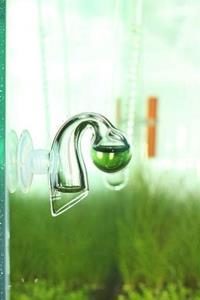
Drop Checker

co2 drop checker
CO2 Drop Checker

Another way to measure CO2 in aquariums is with using a drop checker. This method became popular because it allows you to monitor CO2 24/7 by simply looking at it. Additionally, buffers won’t have an effect on results. In my opinion, CO2 drop checker is probably the most accurate way to measure CO2 in aquarium.

Basically, CO2 drop checker is a reservoir that holds a 4 KH solution and a pH indicator. The reservoir is built inside so that there is an opening that allows gas (CO2) exchange between the solution and the water in the aquarium.

As the CO2 gasses off from the aquarium into the drop checker, the ph lowers and the color changes (because of the pH indicator).

It is now easy to know what the CO2 level in the tank is because:

  1. The pH in the drop checker is the same as the pH in the tank.
  2. We know the solution in the CO2 drop checker is 4 KH.
  3. There is no other buffer to make our reading inaccurate.

A Green color indicates a pH of 6.6 which tells us we have +/- 30ppm of CO2 in our tank water.

Solving The Green Water Aquarium

By Aquabase | Last Updated Feb 17, 2019

green water aquarium

Eugleana, also known as Green Water in an aquarium is a free-floating single-celled alga. This is one of the most ambulant forms of life and an essential part of the food chain. With the right conditions, these algae can be very productive. The name aptly describes the appearance. Aquarists often have green water aquarium problem shortly after the tank is set up, in tanks with more lights and/or after the change of the water or the use of chemicals that affect the biofiltration tank.

When summer day arrives, Aquarists often get problems like green water aquarium, they tank all green or even better. One easy way to resolve it is must keep the lights off at all time to avoid this problem.

How to get rid of green water in an aquarium?

What cause green water anyway? After a few years in the aquarium maintenance, I noticed that most tanks with green water in fish tank have the following in common:

  1. 75% of the time, the problem happens within the first month after the tank is setup
  2. 24% of the time, the problem happens after a major cleaning (large water change, filter cleaning, etc.)
  3. 1% Others

Green water aquarium is generally caused by a spike in ammonia, and this is the reason why it happens so often in new tanks and also after excessive cleaning and water changes. I never encounter a Green Water problem in tanks with a good and strong nitrogen cycle. Strong light will help Green Water to grow better, but light alone won’t trigger it. After the initial bloom, it’s difficult to get rid.

When starting up a new tank, the best way I found to avoid this problem is to either keep the lights on for only a few hours a day or, even better, to use old filter cartridge and water from an old tank. Once the nitrogen cycle has established itself, all you need is to make sure to have sufficient filtration and not flush or kill Nitrifying bacteria.

There are many ways to get rid of a green water aquarium problem, but the following are what I have found to be the best:

UV Sterilizer:

By far the best way to solve this green water in fish tank problem. Just turn it on want watch it kill the algae with ultraviolet light. You can buy and applied the UV Ultraviolet Sterilizer to your aquarium. Today many canister filters that has include with UV sterilizer. You can use that filter such Aquatop CF400UV with UV to clean green water fish tank.

Diatom Filter:

I never tried this, but I have been told it does a great job. Unfortunately, I can’t say more about it. If you have experiences using a Diatom Filter against Green Water, please share it with us using the comment box bellow.

Blackout:

This can be a good way to get rid of a Green Water problem if you don’t want to invest in new equipment. You need to cover the tank with cardboards to block out any ambient light just for 5-7 days. Leave the aquarium lights off and don’t feed your fish for that period. Don’t worry about aquarium plants, they are strong enough to survive without lights for a good week. After a week, If there is a dead leaves, remove them from the aquarium then change the water about 25% of the tank. This should solve your green water problem.

Flocculants:

Additives that clumps small particles together might help by allowing your mechanical filtration to remove them from the water.

Micro Cartridges:

Filtering the aquarium with micron cartridges or diatom filters will successfully eliminate these algal blooms.

Depending on how severe the green water in an aquarium is it may take the blackout in combination with diatom and/or UV sterilizer.

Tropical Rainbow Cichlid Fish

By Aquabase | Last Updated Jan 20, 2019

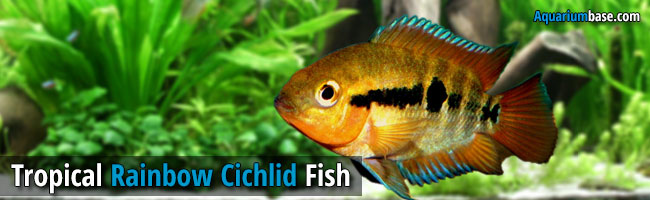
Rainbow Cichlid fish

Species name: Herotilapia multispinosa
Common names: Rainbow Cichlid
Family: Cichlidae
Subfamily: Cichlasomatinae
Order: Perciformes
Class: Actinopterygii
Maximum length: 3.6″ (9 cm)
Minimum tank size: 50 gallons
Aggressiveness: Semi-aggressive
Hardiness: Easy
Distribution: Central American: Costa Rica to Honduras and Nicaragua
Diet: In the wild, Herotilapia multispinosa is often found eating small insect larvae. In the aquarium, however, they will take just about any prepared food.

red rainbow cichlids

Rainbow Cichlid Profile

While there are many different species of Cichlids, the Rainbow Cichlid is rather unique in both its shading and calm nature, as well as a few other distinctive identifying features. Undeniably the smallest and most peaceful of the Cichlid family, the Rainbow Cichlid is classified as the monotypic genus Herotilapia multispinosa. Its individual inclusion in this genus is largely due to the fact that it has tricuspid teeth, a feature unique only to this species. This wonderfully novel species of fish is native to Central America, where, in its natural habitat, it is able to use its interesting tooth formation to feed on algae. Its natural habitat consists primarily of rock and sand in fairly fast moving waters.

Rainbow Cichlid Breeding

In breeding season, these freshwater fish will lay 600 to 10000 eggs at a time on rocks and roots. The female will protect these eggs by fanning water over them with her fins. While generally known to be rather good parents, they have on occasion, been known to eat their own eggs. They are established to be a semi-aggressive species, and can be kept in an aquarium with other medium sized Cichlids.

Famous for its fantastic coloration, the Rainbow Cichlid is well known for its ability to alter its color according to mood. It will often change colors when frightened, when sexually active, or when with its young. With a lemony, yellowish orange body and beautiful iridescent hues, the brilliant striping of this fish runs from behind the eyes to the caudal fin base. The unique coloring of the species sets it apart from the others in its family of Cichlid. The male is typically larger in size and of a brighter shade.

In addition, he tends to have longer, pointed anal and dorsal fins. The edging on the fins may consist of a bright blue tint and be alternating blue rows of color. While it may be a bit difficult to distinguish between the male and female of the species, one feature of the female that particularly marks it from the male is a dark spot just below the dorsal fin and on the lower gill cover. The most brilliant coloration of these beautiful fish can be observed during the breeding season.

The Rainbow Cichlid is a very hardy aquarium fish. The tank should be set up with rocks and roots to make the fish feel that it is in its natural environment. The optimal water temperature should be maintained at 72-77F or 79-81F, with a ph of 6.5 to 8.0, and a dh9-20. Be sure to have a tank capacity of about 50 gallons and maintain the light at a medium range to provide lots of room. The aquarium should have a sandy layer at the bottom with well-rooted plants.

The Rainbow Cichlid does not have a tendency to burrow, so your plant life will not likely be uprooted. Broken pottery shards make good hiding places when strategically placed among plants. Its tricuspid teeth enable this fish to feed on the rock algae, but it will also feed on dried bloodworms, ocean plankton, flakes, and also Cichlid pellets and vegetable based foods. The ease associated with caring for the Rainbow Cichlid, coupled with its extraordinary and unusual beauty, make this fish ideal for the beginner.

Do you have experience with the Rainbow Cichlid? Share with us using the comment box bellow.

Read Also Related Cichlid Fish:

  • Green Terror Cichlid

Basics Flowerhorn Care for Beginners

By Aquabase | Last Updated Feb 17, 2019

flowerhorn cichlid fish care

Lots of freshwater fish that have a beautiful body and one of the beautiful freshwater fish with a unique body shape that you can find today is the Flowerhorn Cichlid.

Flower Horn is a beautiful fish with a very impressive behavior, temperament, and totally unusual appearance. Flowerhorn cichlid fish is a hybrid, included as the cichlid family with the beautiful appearance and strong characteristic also it’s good looking and fruitful. You can put this cichlid fish in your favorite fish tank.

As exotic fishes, the flowerhorn is a hybrid cichlid fish by a man in the early 1990s. Started in Malaysia and Taiwan, the Flowerhorn was created by cross-breeding cichlids from Central America. The four main types are Zhen Zhu, Golden Monkey, Kamfa, and Golden Base or Faders. Various strains exist within these types. And the most famous type is named the Red Dragon Flowerhorn. Cross-breeding has made Flowerhorn fish available worldwide.

red dragon flowerhorn cichlid fish
Red dragon flowerhorn

Before keeping the Flowerhorn as your favorite fishes, you need to know about the fish and how to take care of Flowerhorn Cichlid. There are some tips that will help you to keep the Flowerhorn stay healthy and beautiful in the aquarium.

Suitable Tank for Flowerhorn Cichlid Fish

Editor’s Pick
flowerhorn fish tank cabinet
75/90 Gallon Upright Aquarium Stand for Flowerhorn Fish

The tank your choice for the Flowerhorn cichlid should be proper with the size of fish. You can choose the tank with 75 gallons or more. It will give a comfortable place for the fish to swim. The temperature of the water also needs to be considered. There must be 84 until 86° F or 28 until 30° C. Water pH also should be in 7.2 until 8.2. It will make the fish get the best place to live. The big tank will be excellent for the fish with a larger size. If you like to put the small fish, for example, is 1-2 inch fish size, you can use the smaller tank. The tank which has 20 gallons size will be suitable for small flowerhorn. After the fish reach the bigger size such as 3-8 inches, you can use the tank with 40 or 55 gallons. The tank is the important thing that will influence the growth of the fish. When you do not change the tank after the fish grow bigger and larger, it will make the fish grows not optimally.

Some Tips To Make The Flowerhorn Cichlid Stay Healthy And Happy

There are some points that will help you to treat your beloved Flowerhorn fish in your aquarium. You should keep the bottom of the tank stay clean from the debris. You need to clean the bottom while you change the water. The uneaten debris can damage your fish health. You should take the debris when you see it on the bottom. The temperature of the water should be consistent. You can use the aquarium heaters such EHEIM Jager and it will make the water stay warm and make the fish feel comfort.

The other important thing is about oxygenation. You can choose the good oxygenation that is usually using the sponge or the air stone. The bad oxygenation or even do not use this device will make the fish stressed, and they may die. The good filtration will give you much ease. You need the canister filter to clean your Flowerhorn tank. You can use our recommendation Cascade 1000 to do this. Then the water will stay fresh for a long time so you should not change the water every day. The canister filtration system has the function to keep the good bacteria in the water tank. If you want to make sure about the water condition, you need to use a test strip to check the pH, ammonia levels, or nitrate levels.

Besides the clean the tanks, to make your Flowerhorn fish happy you may put some aquarium decoration such as coral, rock or small stone that usually used for aquarium decor. The Flowerhorn Cichlid fish will play the stone and make your pet feel comfortable and stay healthy.

The Best Food for Flowerhorn Fish

Feeding the fish is an interesting activity. You can see how the fish eat the pellet when you put the pellet in the tank. When you want to feed the fish, you should know about the proper portion. Do not let the feel overfeed because it can make the fish dead or make the water easy to look dirty. The fish can be stressed because of many factors such as tank size, water, food, or others.

The food for flower horn cichlid is very simple. You can use the dry pellet with the highest quality. It will provide excellent nutrition for the fish. The high-quality product that you can find on the market for fish food should contain 45% of protein. After the fish reach 8 inches, you can choose the pellet with lower protein, or you may feed with live fish. So what is the best food for your beautiful flowerhorn cichlid?

Get the best Flowerhorn fish food here

The best food for the flower horn cichlid is some live fish such as small fish or may give him some shrimp. Besides that, The other kind of food that will give more nutrition is frozen bloodworms. You can give it twice in a week. It can be the best treatment for the Flowerhorn fish. Protein content contained in live fish and bloodworm is very high, and it’s excellent for growth your flowerhorn head. Pellets sold in the market are also good as long as they have a high protein content. The fish may show that the condition is not good from the behavior. The color of the poop can show the healthy condition of the fish.

About the fish behavior, if the fish poop until over than 2 days and it has the red flag, you should be careful and take the quick treatment. The white color of the poop and has the stringy pearl shape can be the indication that the fish get Hexamita. This problem can make the fish die because it is the intestinal sickness of the fish. If you do not take the correct treatment, you will see that your fish will die slowly. You can reduce this risk by making sure about the water condition and the food.

If you feed your Flowerhorn fish with pellet, you can use the automatic fish feeder to control and help you for feeding the fish.

Tips to treatment the Hexamita

When you find the indication or the symptom of Hexamita in your Flowerhorn fish, you should take the other fish separated from the sick fish. It can be the best prevention for the other fish. You should prepare another tank for the healthy fish. You can move the fish to the other clean tank and then you should clean the tank with unhealthy fish or change the water. It will be good for you to use Fritz Aquatics Mardel Clout and it can be an effective treatment for your fish health. You can find the product, and you should learn about how to use from the direction.

Flowerhorn Fish Gallery

  • Golden Base King Kamfa
  • king kamfa f2
  • Super Red Yellow Base

The Flowerhorn Fish Breeding

It may be proper for you who is an expert on the fish. The beginner also needs to know about the basis for the future. If you want to learn more about Flowerhorn care, you need to know the basics of fish breeding. You can choose the correct type of fish. The first experience you may need to use parrot cichlids and find the couple. You can put them in the same tank. You should make sure the food provides the best nutrition. After you see that the fish is ready to mate, you can make the tank with the special condition. Newspaper can you put around the tank and let them be alone.

The fish may fight when they do not mate. You should move the female to avoid this condition. If the fish mates properly, you can put the rocks in the nest. This experience is not a simple thing. You need to know more detail information for the best result of your experiment. When the female contains the egg, you should move the female to the other tank with the right filtration. You should avoid the egg to be sucked by the filtration.

It is important information for you who like to have unique fish. The Flowerhorn cichlid has the beautiful shape with the big head. You may feel so loved with this fish and do not want to let the fish die. You should make sure that the condition of the aquarium is proper for your fish. The big tank with 75-gallon size is the best choice. It can make the fish grow optimally. The fish can swim freely and avoid stressed condition. The knowledge for the beginner about the tips for the Flowerhorn care will make the fish life happy and healthy.

Best Types of Tetra Fish for Beginners

By Aquabase | Last Updated Jan 20, 2019

types of tetra fish

Neon Tetra is one of the most easily-available groups of fish in an aquarium tank. There are many types of tetra fish, and some are perfect for newcomers to fishkeeping. Other species are much more challenging, and best avoided unless you’ve kept tetras before.

Choosing The Best Tetras

Before you buy any tetra fish, know this: tetras are schooling fish. This means they prefer to be kept in a group. Most species of tetras are happiest in groups of six or more of their own kind. Since you are buying multiple fish, it is even more important to check the size the tetras you want will grow to. Six six-inch bucktoothed tetras will need a lot more room than six 1.2-1.5 inch Neon Tetras.

It is also good to know that most tetras are happiest in somewhat acidic water, although water requirements vary greatly by species. Some are a lot more particular about water pH and cleanliness than others.

Good types of tetra fish for beginners:

  • Glowlight Tetra
  • Neon Tetra
  • Pristella tetra
  • Black Skirt, Black Widow, White Skirt (they are all the same species)
  • Head and Tail Light Tetra
  • Serpae Tetra (but can be fin nippers)
  • Red-Eye Tetra (but gets bigger than most and can be fin nippers)

This is a partial list, as there are many types of tetra fish that some people find easy and others difficult. One reason for these differences in opinion is local water conditions. Someone in an area with soft, acidic water conditions is likely to find keeping and breeding Cardinal tetras easier than someone in an area with hard, alkaline water. Cardinal tetras really do need the acidic water, while Red-Eye Tetras do not.

Other factors: Tetra disease

Another factor that makes a difference to whether you’ll have success with a species is a disease. Some tetras are more prone to disease than other fish. Betta fish diseases can also occur in tetra fish. This disease is tough to cure and is impossible to cure with standard propriety aquarium remedies. It is contagious, and can often lie dormant. It then awakens when something stresses the fish. Do not buy fish with a visible fish disease, or susceptible fishes from a tank where any fish shows disease. If you do this, you are setting yourself up for frustration and heartbreak.

neon tetra fish

Neon Tetra – The best tetras

Neon Tetra is one of the types of tetra fish for beginners and perpect as fish for small tanks. Neon tetras used to have an excellent reputation for hardiness fish, but now the vast majority of them are mass-bred in the far east with no attention paid to health or quality. This means that the Neon Tetras you buy now are often carrying this parasite when you buy them and die quickly. If you can get disease-free Neons, they are great fish, but Neons with this disease aren’t worth buying no matter how low the price. I wouldn’t knowingly take Neons with this disease if they were free.

Neon Tetras are notoriously susceptible, but danios, cichlids, and most charachins can be susceptible to Neon Tetra disease as well.

The most common recognizable symptom of Neon Tetra disease, Pleistophora hyphessobryconis, is a loss of coloration with pale or white patches of skin, most commonly below the dorsal fish. There are also other symptoms that include spinal curvature, emaciation, fin deterioration and erratic swimming. Do not buy any fish that shows these signs!

Just to make life more complicated, there is a False Neon Tetra disease that shows many of the same symptoms. This is a bacterial infection that can be cured by antibiotics.

Most tetras you buy will be healthy and hardy when treated right, as well as peaceful and beautiful. Overall, they are good beginner fish if you can avoid those sick with Neon Tetra disease, as well as a few species that have special requirements.

Types of Tetra Fish to Avoid:

  • Rummynose Tetras (disease prone, sensitive to water quality)
  • Cardinal Tetra (needs acidic water, if you have that they are easy)
  • Emperor Tetra
  • Bucktoothed Tetra (grows to 6in and can be predatory)
  • Fruit Tetras (these are White Skirt tetras that have been dyed. The process is not safe for the fish, and they are more likely to get sick than regular White Skirts. The color wears off with time, too.)

Betta Fish Diseases – How to Prevent?

By Aquabase | Last Updated Jan 29, 2019

betta fish diseases images

Do you know Betta fish? I believe that most of you have ever heard about the Bettas. For more information, you can read this another post about Betta fish & Care.

Betta fish belongs to the common biota which lives at freshwater and this type of biota is characterized by the long fins which are flowing and the bright colors. They are one of the small freshwater fish you can keep in an aquarium. Their measurement is about two to three inches length, and they can live with the normal expectancy of life. You also do not need to do the special care regarding this type of fishes. Nevertheless, they can sick and here are some of the Betta fish diseases and their treatments which can be done.

Common Betta Fish Diseases

1. Rot and Bloating

betta fish fin rot pictures

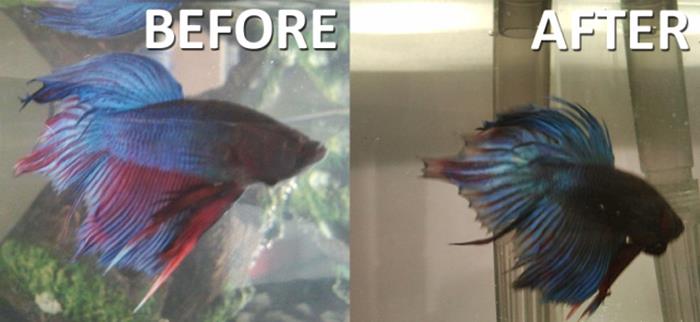
The first signs diseases of betta fish which indicate the animal got the diseases are rot and bloating. Rot is known as is fundamentally a sign of the state of that similar name. It is shown by the body of Betta fish parts which seem to spoil away or tumble off. Both the fins and the tail may likewise seem much shorter. Besides rot, another sign which indicates the sickness of this biota is bloating. This type of biota hints at bloating should be taken underthought. The bloating causes the Betta fish scales to ascend, making it resemble a pine cone.

2. Weird Behavior

The Bettas which are in healthy can be discovered gradually swimming unemotionally around the tank. The behavior which digresses from the ordinarily mellow disposition is able to show an issue with the fishes well being. If the type of this biota remains totally still at the base of the tank, it might be an indication of nitrate or alkali harming or/and bacterial contamination. This sea biota that wildly swims around or/and always scratch its bodies against some different items might be casualties of parasitic contaminations.

3. Gasping At the Surface of Water

The Betta fish should not be kept in little plastic containers or bowls that some of the shops of pet store offer them in. This type of biota needs no less than 2 gallons of water in order to move around effectively and get enough oxygen. Something else, their waste may develop smelling ammonia or salts that burglarize the water in the dish of its oxygen content. This thusly leaves the fish panting at the surface of the water for air. Besides that, this will likewise push the system of fishes resistant and inclines the fishes to get sicknesses.

4. Discoloration

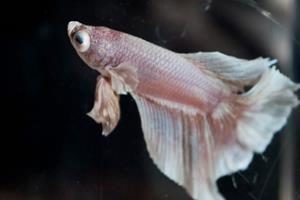
Besides that, another sign diseases of betta fish which indicates that this type of fish getting diseases is discoloration. The fishes arrive in various strong, distinctive hues or/and a blend of various hues such as: white, black, orange, red, or blue. Discoloration of any type is an indication that something may not be right with the fish’s wellbeing. Pallor may be an indication of nitrate or alkali harming. An overcast white patch is regularly an indication of contagious diseases, which transforms into the foul material which incorporates the entire body of this sea biota in case it is left no treatment. Some parasitic contaminations such as Ich and velvet likewise show stains as some minor white spots on the body of this biota and gold colored mist which are found on the scales.

5. Clamped Fins and Lethargy

diseases of betta fish

This type diseases of betta fish regularly hold their balances out and afterward let the fishes stream as they swim around. The Betta fish do not swim holding balances squeezed against their body. The fishes of Betta might flatten the top (dorsal) blades as they rest, however, they never when they are conscious and effectively swimming.

Tetra BettaSafe bettas cure

Besides that, another sign of betta fish diseases is lethargy. Lethargy, joined by a loss of ravenousness, is another regular indication of illness out Betta fish. It’s connected with numerous diseases such as poisoning, shock, bacterial infection, fungal infection, and parasitic contaminations. Nevertheless, the owners of Betta fish need to search for some different signs too, since dormancy and loss of longing can’t be utilized when assessing a diagnosis.

6. Another sign indicating the diseases of Betta fish

  • The fishes just stay at the surface of the water, exactly in the corner of thank.
  • The fishes just lie at the bottom of the tank and come to the surface of water only for breathing.
  • The gills of fishes do not close entirely due to inflammation.
  • Protruding eyes and swollen.
  • A swollen or hollow stomach.

The fishes that give any of the previously stated suggestions ought to be confined from other fishes following most these fishes sicknesses are effortlessly conveyed starting with one fish then onto the next.

Common Betta Fish Diseases and The Treatments

1. Popeye

betta fish popeye disease treatment

The first diseases are Popeye, otherwise called as exophthalmia, causes colossal pressure behind an eyeball of fishes, causing the eyes of fishes to distend. At the first indication of this condition, promptly conduct a change of full water. You can include Epsom salt or anti-toxin, ampicillin prescription to the tank for treating the diseases. Keeping up clean water will prevent the diseases of Popeye from happening the fishes.

Betta fish is able to survive in littler compartments water tanks since they can without much of a stretch take in outside air at the surface of the water, but they need regular water change to keep up appropriate water quality. You should change 100 percent of the tank every day in tanks less than one gallon, and change 25 percent of the water every week in the bigger tanks.

2. Tail Rot and Fin Rot

betta diseases tail fin rot

Bettas as a rule contract tail decay and blade decay through contact with the water which is dirty, henceforth, it is essential to ensure that you generally keep up the clean and healthy fish tank. Harm done to the fishes tails is effectively repairable if the important treatment is regulated rapidly. The tail and the fin tissue are going to re-grow. This kind of ailment should be dealt with utilizing Tetracycline or Ampicillin.

Besides that, the fish tank should be appropriately cleaned and pure water put in another tank. Ensure you should treat fresh water before you are filling the tank water. You are able to utilize the fungus eliminator on another water tank to ensure that this type of biota begins recuperation. It is urgent that you should be predictable with the tank cleaning and water change process when treating tail or blade decay. This should be done in any event once at regular intervals, with the best possible pharmaceutical being included with each change of water. To treat, conduct 50 % water and after that include ampicillin. In the cases of milder, you may have a go at utilizing Maracyn 1 and 2 altogether at 1/2 measurement each.

3. Ich

ich betta diseases

This is the most common parasites found on the body of the fish. This is typically seen some small white dots on the fish body, tail, fins, and heads. ICH can be easily prevented by adding a small amount of Aquarium salt & Aquarisol into the fish tank every time you maintain your tank.

4. Dropsy

betta fish dropsy diseases

Dropsy usually spread by eating live foods. Basically, comes from eating contaminated fish food. A fish with this condition will lift the scales as a result of fluid buildup under the scales of a fish. This condition is as a result of kidney failure. A good precaution is to avoid eating worms for fish. You can treat a fish tank with Maracyn 2 and clean water.

Conclusion

Early prevention is the best medicine ways for betta fish. So don’t overfeed your fish. If you have a medium tank or more, I suggest you using the auto fish feeder to control your fish food. Besides that, to prevent common betta fish diseases by always to keeping the clean tank water and do not use liquid cleaners and maintain the right temperature.

The Most Expensive Freshwater Fish In The World

By Aquabase | Last Updated Jan 13, 2019

Platinum Arowana - the most expensive fish in the world

When we talk about the most expensive fish that exists in the world, it is Platinum Arowana. This fish has been introduced as the costliest creature people will ever buy. It is the rarest animal that people have ever treasured. It is valued at hundreds of thousands of dollars. You will not believe that the current price for one piece of Platinum Arowana can reach more than $400.000. This number is unbelievable, especially for freshwater fish such as this. However, if you take a look at a picture of the fish, you will be amazed by its beauty.

It becomes understandable why the price is so high, more so, after you know that this fish is classified as one of the rarest fish in the world. Being rare means that the number of these fish is minimal. There are not many of them in the world. The platinum color is the result of a rare genetic mutation. However, not all of the Arowana is valued at such a high price. One particular Arowana species has been titled as the most expensive fish in the world, and it is the Platinum or White Arowana. So, what is Arowana and what does it look like? For those who wonder about this, you will get the answer soon.

Platinum Arowana – The Most Expensive Fish

Platinum Arowana is one of the freshwater fish with a bony appearance. This fish has a long slim body with metallic gold-like scales which makes it looks even more fascinating. In the family stage of fishes, This fish belongs to the Osteoglossidae family. Most of the fishes that are included in this family have the bony head with an elongated body. The scales are also different since it appears sizeable and heavy with a beautiful shiny pattern. The Super Arowana is soft and long layered. The head of this fish is also unique because it has a style of teeth that point upward.

super platinum arowana
Platinum Arowana – Most expensive fish to eat

In the scientific fish classification, Arowana is in the Animalia kingdom; the phylum is chordate, the class is Actinopterygii while the order is in Osteoglossiformes and the suborder of this Arowana is from Osteoglossoidei. The species are divided into three types that are Osteoglossum, Phareodus, and Scleropages. This fish is considered a primitive fish from its visual appearance. Apparently, Arowana evolved from a primitive fish, and it still has the characteristic body shape of the fish from which it developed. The spreading habitation of this fish is found mostly in Asian, but it does not mean that other regions are not their habitat. Arowana can also be found in South America and Australia.

Characteristic of the Arowana

This unique fish has several behaviors that you may need to know, especially if you want to put it in your aquarium. As it is included as an Osteoglossids fish, Arowana has a different eating style. Different from most of the fishes that eat plankton, insects and sometimes tiny bird as well. Thus it is considered as carnivorous fish. In the wild area, Arowana can even spit into the air from the water. It can fly to catch their prey such as insects; this is what makes this an impressively expensive fish that is one of the wildest and rarest creatures. He can be super-fast, and he is brilliant. That is why if you want to bring it to your home and drop it into your tank, you may need a tank with extra thick glass.

Editor’s Pick
Arowana Fish Tank cabinet
75/90 Gallon Upright Aquarium Stand for Arowana Fish Tank

The character of Arowana tends to be aggressive, which shows, even more, when they become adults. That is why if you want to keep it in your aquarium, you better locate it in the tank alone without any companion. This fish is known as a solitary fish that chooses to be alone, and not be part of a group or have a mate. The best thing to do is place the fish in a sizeable aquarium that contains more than 75 gallons. You had better use a substantial tank if you want it to grow faster in 8 to 10 months. Besides using the right container, you must provide the best equipment such as a water filter and other fish tank equipment needed to support the growth of the fish. Since you put it in a tank, the Arowana will not be able to fight and hunt its prey that is why you need to feed them live animals such as insects, tiny fish, or another option is frozen feed.

Read Also:

  • The Flowerhorn Fish
  • What the best fish tank filter for your aquarium

Where the Names Comes From

The name of Arowana is not well known. In South America, this fish is generally known for its space name or its Latin name. However, in Asia or Australia, it is preferably identified as Arowana which comes from the Indonesian language of Arowana or Nirwana which means heaven or paradise. This nickname is soon to be known in all over the world, and people now recognize it as Arowana, the highest one. Another designation that is known for Arowana is the name, ‘dragon fish.’

The popularity of Platinum Arowana first began in 2007 when a fish breeder from Singapore was willing to pay such an high-price to bring this fish to his tank. Because this fish is one of the most expensive freshwater fish in the world, the fish that is most popular to own has the platinum silver color which is a super rare color in any Arowana fishes that exist in the world. That is why it becomes more expensively priced than other rare fish.

What makes Arowana Looks Beautiful?

Not all of Arowana fish are priced at a higher level. However, it is unquestionably priced at the highest level ever for several types of Arowana. The main reason for this high price is due to the color of the fish body. The highest priced Arowana has a genuinely unique color such as total platinum color. Another color that is beautiful is the Super Red Arowana. More common types of Arowana include the Red Arowana, Green Arowana, Yellow-Tail Arowana, Silver Arowana, Black Arowana, and Australian Pearl Arowana. People who own this fish believe that it can bring big luck to the owner as it also gives enormous prosperity to those who own it. This fish has great body precision which makes it looks angelic. The adult Arowana can grow up to three feet long in the wild are. However, it may grow less if you get it from a domestic area.

Super Red Arowana
Super Red Arowana

Moreover, the Arowana has a unique body appearance that is incredibly beautiful. The sizeable metallic scales with coin shapes make the visual of this fish look even shinier. The perfect body makes it genuinely strong, and self-sufficient. This fish can also grow for more years, which means it can live longer than the usual fish for the aquarium. The character of Arowana that is strong, and its wild tendency makes it possible for this fish to live almost 50 years. With this fish, you can pass in from family to family, your kid; this fish can accompany you for a lifetime.

Sometimes, if you keep it well cared for, the fish can grow up to 50 years. Of course, having this fish will not be easy. First, if you buy it, the price will be costly. Alternatively, if you do not want to buy it, you have to find it by yourself in a jungle river which can be dangerous for you if you are not a professional. You need to know how to keep it, and you have to prepare a large and secure tank for it. However, above all, having this super expensive fish will give you an extraordinary pleasure that you may not find in any other fish.

How to Care Dwarf Freshwater or Pea Puffer Fish

By Aquabase | Last Updated Jan 28, 2019

dwarf pea puffer care

The dwarf puffer is a kind of fish which has a small body. This fish is also known as Carinotetraodon Travancoricus or pea puffer. Pea Puffer fish originally comes from rivers of southwest India and it has the unique body. If you are looking for the best small freshwater fish for your aquarium, you can choose this freshwater puffer fish. The cute animal is suitable to be placed in your tank. Moreover, it has unique characteristics which will make you happy to have it. But, how and what tips to care pea puffer fish?

Dwarf Freshwater Pea Puffer Fish

Before knowing how to care this Pufferfish, you should know the character of them so that you can give the best treatment. This fish has the small body with yellow scales. It includes in the freshwater fishes so that the best habitat is in the fresh water. The dwarf puffers do not like to live in the brackish water. If you put it in the wrong water, it could kill this animal. However, if you put it in the fresh and clean water, it will be fine. Thus, you should be careful when you fill the water in their tank. You have to ensure that the water is fresh.

In addition, the dwarf puffer fish cannot get bigger. The maximum size of the adult pufferfish is 2.5 cm or one inch. You may find the smaller of they. If the dwarf pufferfish get mature, the males become more attractive and beautiful because the color of the scales is brighter than the female one. One more thing to distinguish male fish is the banded stripes are located behind their eyes. Moreover, They will also sometimes has the dark stripe which is found in their belly.
To find dwarf pea puffer fish is rather difficult is relatively new to the aquarium hobby and you need more attempts when you want to have this fish. The stunning color of the scales makes you have the spirit to find this fishes. Moreover, they have awesome behavior. This is the little sweet puffer fish which is easy to recognize their owner. This freshwater fish has a strong intelligence. To know the owner, they only need a short time. If they need food, they will have an attractive movement which means that they are begging to be fed. This freshwater puffer fish has a unique way to ask food for their owners.

Feeding – Pea Puffer Care

There important things you should know when you want to take care of freshwater fish is feeding. To make the pea puffer fish grows well; you should provide the best food for them. The nutritious food will make them grow fast. The Dwarf Pufferfish needs individual pellets. It will be rather difficult for you to find the food. When you ask the pallet in the fish store, sometimes it does not provide it. Commonly, they eat the snails or mollusks, insects, and invertebrate. You have to give them the best food regularly. If you keep they starving, they will die.

Feeding Dwarf Puffer Fish

Besides, if you are difficult to find the best food for the dwarf puffer fish, you can give them frozen food such as daphnia, bloodworms, and brine. Those can be the best option for feeding the pufferfish. Moreover, you do not forget to give the snails for them. By eating snails, your cute fish will get the best nutrient. However, if you want to provide them with the snails, it is better to give the smaller snails because this bass will refuse to eat the larger snails. The small one is the best food for this animal.

The Right Housing

The other important thing on pea puffer care is the housing. When you are taking care of the animal, you should provide the right and comfortable habitat. To make the right house for this fishes, you should provide an aquarium. As it is, known that the dwarf puffer fish is the freshwater fish so that you should fill the fresh and clean water in the tank. You should keep this puffer fish away from the saltwater or brackish water. To make they live well, you should change the water regularly.

housing dwarf puffer fish

The next way to make a comfortable house for this fish is by adding the live plants. It is used for maintaining the fish. The fake plants also can be included in the aquarium, but the live plants are the better choice. You can put some low light aquarium plants such as Anubias. You do not overdo to put the plants. Too many plants are not healthy for the fish because it creates aggression. You only need several plants for the housing. Besides that, you need good aquarium lighting such Finnex Ray 2 to help the growth of aquarium plants well.

The other thing you need for creating the best house for pea puffer care is the water filtration. This tool is required to clean the water so that the water will stay clean. When you want to buy the filter for your tank, you should know what is best for you tank. The canister filter will be great for you. The best filter needs the most expensive price. Read our last post to help you with choosing the best fish tank filter you need here Best Aquarium Filter.

Aquaclear 20 power filter

If you have a tank under 20 gallons and choosing a hang on back (HOB Filter), I would strongly recommend choosing Aquaclear 20 power filter for dwarf puffer care. This branded filter combines excellent filtration with a durable design and one of the best filtration systems for an aquarium. It will keep your tank cleaner for a long time. But if you have greater than 20-gallon you may choose Canister such the Fluval external filter.

Breeding Tips

To breed the freshwater dwarf puffer fish is not too difficult. If you give the best house, food, and the right temperature, your cute pufferfish will grow well. The right plants you choose for the tank will make the fish stay healthy. You can use several kinds of plants such as java moss, hydrophilia, and so forth for the plants. The right habitat will make this animal produce eggs. Thus, you do not need to be worried about the breeding of the pufferfish because it is easy enough to care this fish.

Green Terror Cichlid Fish Facts

By Aquabase | Last Updated Jan 29, 2019

green terror cichlid fish

Species name: Aequidens Rivulatus
Common names: Green Terror
Family: Cichlidae
Order: Perciformes
Class: Actinopterygii (ray-finned fishes)
Maximum length: Adult males can reach 10″ to 13″. Mature females are usually smaller at about 6″ to 9″.
Minimum tank size: 55 gallons for a pair
Hardiness: Easy
Aggressiveness: Aggressive
Distribution: Peru and Ecuador
Diet: Omnivorous. Accepts all types of food.

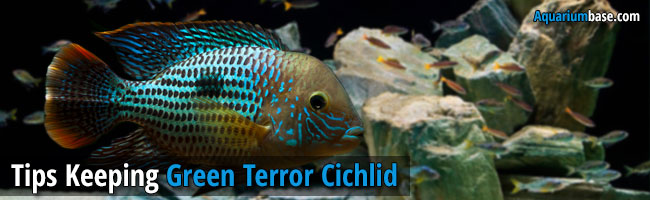
The Green Terror cichlid is one of the most popular fishes in the breeder world. This is due to the double character that has been kept by this fish. This fish is known as an aggressive fish while actually, they are quite peaceful fish. It becomes known due to its low face which means its beauty and its beast character that keep in the one body. This fish is not that bad and awful like you cannot even touch it nor pet it. It is not like that. But due to its totally beast behavior which seems hard to be tame, many people become uninterested to pet this. In fact, this fish is really beautiful in its own way which you may not have known before. Thus there are several things that you need to know to make you fall in love with this fish.

Green Terror Fish

Green Terror Habitat

The natural habitat of green terror cichlids is found in Ecuador and Peru in South America, where the Spanish-speaking population commonly refers to it as Vieja fish. The typical Green terror cichlid habitat is the coastal rivers that you can find on the Pacific side of these two countries, begins in the River Esmeraldas in Ecuador and continues to the River Tumbes in Peru.

This scientific name of this Green Terror fish comes from the Animalia kingdom continues to the phylum that is included as chordate while the class is Actinopterygii. The order of this fish is Perciformes, and the family comes from Cichlidae. Thus it is given the Cichlid name on their epithet name. The subfamily is Cichlasomatinae while the genus is Andinoacara and the species is Aeduidens Rivulatus. This fish nature ecosystem water is actually at the rate of 6.5 pH and 8.0 pH, and the range temperature is around 20 – 24C.

Appearance

This name is referenced to its visual look that seems to be little fierce and strong while the green means the color preference that looks close to green lichen color and sometimes tends close to the olive green. This fish has Latin name as Aequidens Rivulatu. This fish is actually freshwater fish that comes from South America. The body appearance of this fish is various but the most one is blue-green that has light yellow color on its dorsal and the caudal. The pectoral and the fins are colored with light blue as well. This fish has a compact body that looks bold with a quite big forehead. By seeing this you can imagine how beautiful the fish is.

Green Terror Size

The size of this fish is different. The male green terror can grow from 12 up to 113 inches while the female is smaller which they can reach from 6 inches up to 12 inches. The color body of each is quite different as well. The male will have more attractive color while the female has more subdued color. The life year of this fish is quite long. It can live more than 10 years in a wild river and can be longer if your pet in an appropriate way. Green Terror cichlid is known as an aggressive fish, a very aggressive one, but they really beautiful.

green terror fish

Keeping the Green Terror Cichlid

Even though the general statement saying that this Green Terror cichlid is an aggressive fish actually it is not. People seem misunderstood about the characteristic of this fish while actually this fish really have a quite calm character. That is why if you want to put in the tank along together with other fishes, you need to know about several things at first. What you have to note with the red line is the fact this fish is actually a quite peaceful fish. They can be in a good manner as long as you put it together with the same species.

This is the firsts secret you can keep. You have to put the fish along with their own family with the same like the size as well. The Green Terror fish is a monogamous fish which means you have to place it into the different tank if you want to pet several paired fishes. This fish does not compatible with paired fishes. So, the best thing for you when you are going to keep it on the tank is by placing it together with the same species. Others suggest that you still can take note is by decorating your aquarium with open space for a swim which means you have to buy a quite larger aquarium for your fish.

Tiny aquarium just is not suitable for them. You have to palace it on the wider area so they can swim freely. You have to put many rocks as well. The rock can create the shelter that is their habits. They can build territory as well. What you need to know is you have to prepare rather sturdy rocks for you. The rocks should be the stable ones since this fish is included as an active fish. They can digger the rocks as deep as they want because it is included as the habit that they like. The steady rocks will not easily be fallen as well so it is safer ad not dangerous to your fish. Moreover, it will not crack the tank as well.

This Green Terror cichlid has been placed on the aquarium which the gravel has the thickness around. It will be much better if you can add the submerged plants that are alive as well so your tank will look more lively and attractive. For example, you can put some low light aquarium plant like the Anubias since it has strong leaves. You are allowed to use the plastic one like amazon swords (Echinodorus) or Vallisneria as well. With these plants, your aquarium will totally look marvelous. You have to remember to clean your tank very often because this fish needs it very much. You have to change it frequently.

As useful tips for you is by using the canister filter for your tank. The best aquarium equipment will help you by giving a cross-flow water tank in a really good way. Also, it gives you balance heating for your tank which is good for your fish as well. Others think that you need to think is the tank lighting. The lighting has to be personal. The right aquarium lighting will help the plants grow well. You have to put the balanced lighting that comes from the very low lighting into the bright one. You have to control the algae so it will not grow too much which will impact something that is good for your fish. Please check this Finnex Ray 2 lighting review that might be your best choice.

Feeding

This is an important thing you really need to know. The Green Terror fish is an omnivore fish which means they can eat both plants and insects. You can feed them with meats or plants at the same time. You can also feed them with frozen food if you like. The recommended one is bloodworms, Mysis shrimp, krill, brine shrimp, and much more. If you prefer to give the live animal as their food then you can try to give worms in a small size, houses flies, or any crustacea.

green terror cichlid tank mates

Breeding Green Terror Fish

If you are the breeder, you have to know that this fish in an egg-layer nest guarding fish which means you have to place it into a special tank. You have to put it into the different once they have egg since they can be so very aggressive. Thus, to help it from killing each other or destroying the egg you have to separate it. Setting the temperature of your tank in an appropriate range, you have to provide big and larger tank space as well so they can swim freely which is good for them. It helps them not to fight each other. You have to remember to put them together with the same species as well. So, here is all that you need to know about this fish. Good Luck.

Common Types of Tropical Fish for Beginners

By Aquabase | Last Updated Jan 20, 2019

types of tropical fish

Every people have different hobbies. One hobby that is interesting is collecting animals. Sometimes, fish also can be used for pets. Furthermore, there are several types of fishes. There are saltwater and freshwater fishes. Both of them have the different species. The tropical freshwater species is various. When you are looking for one, you may choose the beautiful and unique type. However, for beginners, there are several types of tropical fish that you can keep in an aquarium. This species is very easy to find and are kept even if you are not expert in the Aquarium.

tropical fish for beginners

Best Types of Tropical Fish for Beginner

So many types of tropical fish you can keep today, but not all that fish you can easy to care. There are several common tropical freshwater fish that you can keep with less maintenance and easy to care.

1. Neon Tetra

Neon Tetra Fish

Neon Tetra becomes the popular and famous freshwater fish. It has a tiny body with one inch of length. It also has a vibrant color. Furthermore, this docile animal is easy to care. The Neon Tetra can be a good choice as fish for small tank.

2. Swordtail Fish

Marigold Swordtails tropical fish

Swordtail becomes the other beautiful and lovely as best types of tropical fish for beginners. It has two inches in length, and it has the unique characteristic. You can put female and male swordtail together in an aquarium. Swordtail is peaceful and active, but it is not aggressive. This unique Swordtail fish can be your choice for your new aquarium.

3. Fancy Guppy

Fancy Guppy

The other types of tropical fish you can put in your tank is fancy Guppy. It is the beautiful one which has long fins and tiny body. The very active type with the beautiful colors you can keep an aquarium to make your aquarium more beautiful. The vibrant color on fancy guppy makes this fish so cute. However, if you have the aggressive and bigger in your tank, it is better for you not to put this fancy Guppy together because this type may be eaten by them. The fancy guppy type is really suitable for your small aquarium.

4. Corydoras

Corydoras Catfish Sterbai

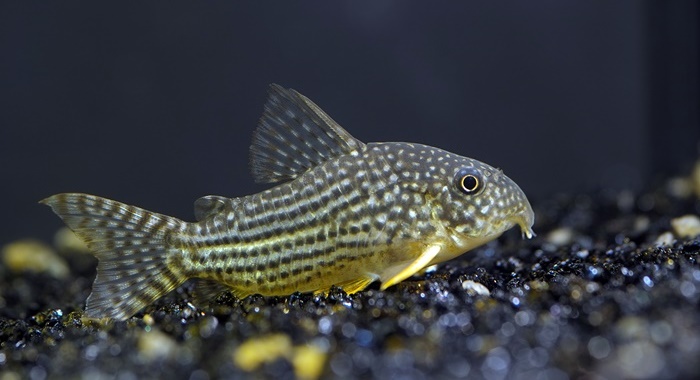
Corydoras call as Cory catfish is also the common type of fish that can be considered for your tropical aquarium. Cories is a genus of freshwater in the armored catfish family. It is ancient-looking and small fauna which has the different characteristic from another tropical species. It has two until three inches for length.

5. Black-Skirt Tetra

Male Black Skirt Tetra

Another one you can keep is Black-Skirt Tetra. Having the little round body is one characteristic of the Black-Skirt Tetra. This is very beautiful fish which have the silver and black colors for its striped bodies. Black Skirt Tetra named as the best tetra fish for beginners. It also has the black flowing fins which make its body looks so sweet when they are swimming together in a group. It is docile and easy to be cared because Black-Skirt Tetra does not need the particular food. It eats the same food with the regular one.

6. Zebra Danio

Zebrafish Danio tropical fish for beginners

The next fish that we suggest on types of tropical fish for beginners is Zebra Danio. It is the common fish that is suitable for beginners. It is the cute, active, and hardy which can be used for your small tank. This has the black and white stripes for its body. Zebra Danio has an inch for length.

7. Cherry Barb

Exotic Cherry Barb

And last our advice you can keep in your small aquarium is Cherry barb. This is the beautiful fish, but some people say that it includes in semi-aggressive fishes. However, you can choose this one for your freshwater tank.

Tropical Fish Care Guide

If you are pet lovers, you have to be a good keeper for your pets. Choosing the beautiful fishes is not the end. You have to take care of your keep. Furthermore, if you keep the tropical freshwater fish in your aquarium, you have known the way to take care of them so that your fauna will always be healthy and beautiful. You need several steps to caring for the fauna on an aquarium. The first thing that you have to do is creating the comfortable tank for your pet. It can be done by doing several things.

First, you have to cycle the fresh water on your tank about 50% to 70% of the water every six to eight weeks. Besides, on your aquarium, you need the right filtration system and low light plants. You have to set all things above before you choose one. Second, you have to choose the suitable fish for your tank. You have to adjust the fauna with the aquarium that you have. If you have adopted the type of tropical fish for your tank, you have to maintenance your tank regularly. Those are several steps for caring so that they will be healthy.

Essential Equipment

For the tropical aquarium, you need several pieces of equipment for caring. The necessary equipment for tropical fish care is a good tank, gravel, water filter, filter media, water thermometer, water heater, right fish food, cycling fluid, water conditioning fluid, fish net, and hose and siphon. These equipment are really needed for aquarium care. When you keep fishes in your tank, absolutely, you should have that aquarium equipment. Beside that tools, you may need some species to care of your aquarium. Some of them can clean up your tank healthy.

Prevent Tropical Fish Diseases

To make your fauna stay healthy, you have to give the best treatment and health care for your fishes. Some tropical fish can be attacked by some betta fish disease like bacterial infections, fungus, ich, lymphocystis, parasites, pop-eye, and other. So, you need the several medication for making healthy. Some of them require a particular medicine. Therefore, you have to know several medications for your fauna. Commonly medicinal products for fishes are API Melafix, Copper-AID, Coppersafe, and Cupramine. Those medicines you can easily found on the market today or your favorite online store and of course can be used for caring of your fishes. The best treatment is the right way to make your fauna in tank stay healthy.

In addition, other medicines that can be used for your fauna are Eco-Balance, E.M Erythromycin, Fungus cure, Herbtana, Ich-Attack, immune-plus, KanaPlex, Maracyn, Maracyn Oxy, Maracyn Plus, Maracyn Two, MelaFix, Methylene Blue, and so forth. You can choose the medicine that is correct for your fauna because the diseases that may attack you tank species. The health care for fish needs to be considered if you want a healthy aquarium. As the fishes lovers, you have to be the best keeper for your fish.

Several types of tropical fish above become the right choice for beginners and can be the best option to keep in your first aquarium. You can keep one or more tropical fish on your tank. You have to know the characteristic of each type above to give the optimal treatment. The best treatment for fauna is a good way to make your beautiful tropical aquarium.

  • « Go to Previous Page
  • Page 1
  • Page 2
  • Page 3
  • Go to Next Page »

Primary Sidebar

Search Here

  • Facebook
  • Pinterest
  • Twitter

Disclosure

This post contains affiliate links. For more information, visit my disclosure page.

As an Amazon Associate I earn from qualifying purchases.

About Us

We are here to help you choose the right “Aquarium Equipment” by creating original reviews on which “Aquarium Supplies” are better for their value.

Our main aim is to help you to choose the right fish, equipment, tank, articles reviews both freshwater and saltwater aquariums.

Aquariumbase.com is a participant in the Amazon.com Services LLC Associates Program, an affiliate advertising program designed to provide a means for sites to earn advertising fees by advertising and linking to amazon.com, amazon.co.uk, amazon.ca, and any other website that may be affiliated with Amazon.com Service LLC Associates Program. Amazon and the Amazon logo are trademarks of Amazon.com, Inc., or its affiliates.

As an Amazon Associate I earn from qualifying purchases.

Copyright © 2026 · AquariumBase

We use cookies to ensure that we give you the best experience on our website. If you continue to use this site we will assume that you are happy with it.AcceptRead more